

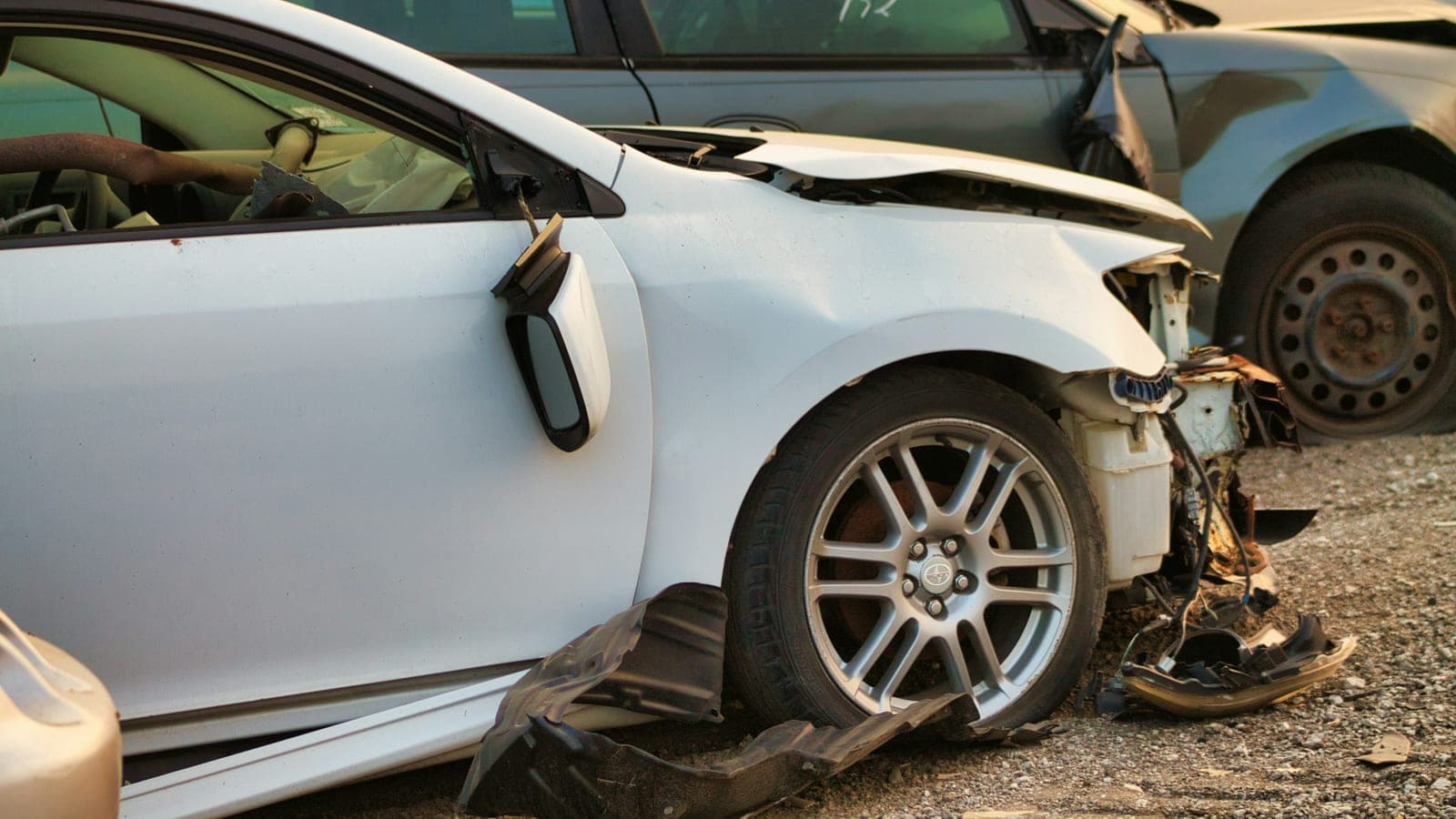
A car accident claim is decided by a short list of things: who was at fault and what proves it, which policies are available to respond, whether the injuries can be connected medically to the collision, and what the losses come to once they are documented.
This page deals with those questions as they arise in a passenger-vehicle claim: the evidence that settles fault, the coverage that may apply including your own, and the medical record the value of the claim ultimately rests on. Margossian Law represents people injured in collisions across California.
How Fault Is Established
The police report matters, but it is not binding. Officers form a view quickly and are frequently not present for the collision. Fault is usually established from the physical evidence: damage geometry, the resting positions of the vehicles, signal timing, and increasingly from vehicle event data recorders and nearby camera footage.
Certain violations shift the analysis considerably. California recognizes a presumption of negligence where a statute was violated, but it applies only where a set of conditions is met, including that the violation caused the injury, and that the injured person is among those the statute was meant to protect from that kind of harm. Where those conditions are satisfied, a red-light violation or an unsafe lane change does a great deal of the work that would otherwise have to be argued from scratch.
Because California applies pure comparative negligence, being partly at fault reduces recovery proportionally rather than barring it.
When the At-Fault Driver Has No Insurance, or Not Enough
California’s minimum liability limits are low relative to what a serious injury actually costs, and a meaningful share of drivers carry no insurance at all. This is what uninsured and underinsured motorist coverage on your own policy is for, and it is often the most valuable coverage in the file.
UM/UIM claims are made against your own insurer, which changes the dynamic: your insurer is now the party disputing the value of your injury. These claims carry their own notice requirements and are frequently subject to arbitration provisions in the policy, so the deadlines are not the same as those for a claim against the other driver.
“Minor Damage” Does Not Mean Minor Injury
Insurers commonly use repair estimates as a proxy for injury severity, and will argue that a low-speed impact could not have caused a disc injury. Modern bumper design absorbs impact specifically to protect the vehicle, and the correlation between visible vehicle damage and occupant injury is far weaker than that argument assumes.
What answers this argument is contemporaneous medical documentation: treatment sought early, symptoms described consistently, and, where warranted, imaging.
Deadlines
The general deadline to file a California car accident lawsuit is two years from the date of the collision. If a government vehicle, a public transit bus, or a dangerously maintained public road is involved, a written claim to the public entity is generally required within six months. Insurance policies impose their own, often shorter, notice requirements.
6 months
To present a claim against a public entity
2 years
To file suit in most other cases